Grail Energy and Cards
The pip math that decides whether a card actually plays.
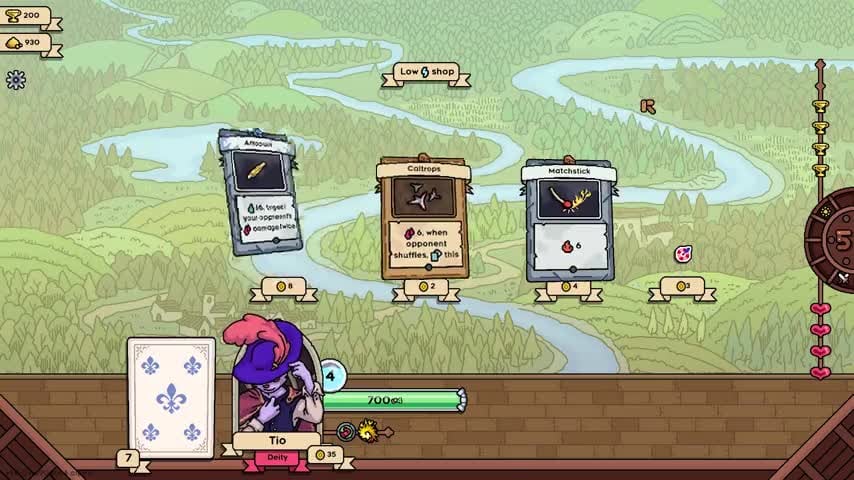
If Grail has a hidden tutorial, it is energy. Every other system — traits, stickers, Iconic cards, even PvP matching — is downstream of whether your cards finish their pips. This page is the curve guide. Pair it with how to play for the turn order and the card tier list when you are staring at a shop.
The pool
You enter a fight with four energy. After each turn that includes a draw, you gain one energy back into the pool. Cards show pips along the bottom. A one-pip Apple can fire the same turn it is drawn if you have energy to spend. A two-pip Jab often needs a second visit. A three- or four-pip rare can sit in the lane looking important while the opponent kills you with commons.
Energy spent on a play is gone. Energy sitting on a card that has not fired yet is also gone from the pool — it is parked. That is the part demo players miss. You did not “save” energy by drawing a four-pip card. You trapped it.
Play, wait, or stall
Three outcomes after a draw:
- Play now — pips fill, card resolves, pips empty.
- Wait — pips are partial. The card remains until later draws finish it, or until a card like Guardbot auto-fires on full charge.
- Starve — your pool is empty and several cards are half-charged. The deck is too expensive for the income.
Starvation looks like this: you drew a 2-pip and a 3-pip, parked 2 energy, gained 1, parked that on a new 2-pip, and now nothing resolves. Meanwhile a thin poison deck has already shuffled once and detonated. If that sentence feels familiar, sell a expensive card before the next node. Selling is always legal; see getting started.
Deck size is energy in disguise
The player with more cards usually starts the fight. That bonus is real and usually not worth it. Extra cards mean extra draws that are not your engine. Extra cards also mean more pips competing for the same four-plus-one income. A seven-card Ratagnan deck with a clear bleed core will outpace a fourteen-card pile of “could be good.”
Count cards the way you count gold. The overworld portrait shows a small card-count badge (footage often shows 7). If that number climbs every shop, you are not building, you are collecting. The run planner has a line for “cut one card today” for this reason.
Income tricks
You cannot click for more energy mid-fight, but you can buy the idea of more energy:
- One-pip payoffs that you are happy to see every cycle.
- Cards that refund or grant energy when they play (demo poison lines sometimes grant energy on apply).
- Self-playing cards that fire as soon as they fill, so they stop blocking the lane.
- Low energy shops on the map when your curve already slipped.
- Traits that interact with energy or with playing a type you already own.
- Over-heal (new in 1.0) if you are banking health instead of front-loading damage — not extra energy, but it buys time for slow pips.
Shock as a status is the rude cousin of this section: it triggers on energy gain. If you are the one gaining energy every draw, a shock stack on you is a tax on your income. Copper wire is an example applicator from launch footage. Do not stack shock on yourself by accident; read status effects.
Cost versus replay value
Grail combats do not end after one hand. Cards reshuffle and play again. A 1-pip card with a small number that you see four times will beat a 3-pip with a huge number you see once. When a shop shows Stilettos (“27 twice”) versus a four-pip bomb, ask how many times you will fill it before turn 40.
Upgrade levels change numbers, not the pip count, unless a specific enchantment says otherwise. That makes blacksmith visits a damage multiplier on a curve you already like, not a way to fix a bad curve. Details in upgrades and enchantments.
Character pools change the curve
Ratagnan wants cheap bleed hits that trigger Toothpick-style stacks. Mabel wants food and cheese loops that may include higher pip heals. Zappy wants gadget cards (Steam pack, Plier) that can be pip-awkward if you splash Ratagnan attacks. Do not copy a starter build onto the wrong character.
Iconic cards are legendary-feeling uniques, not a license to ignore pips. Rapier of the Rat, Carrot roast dinner, and Johanna’s prosthetic still have to fire.
A practical shop heuristic
Use this in order:
- If nothing played in the last fight, buy cheaper, not rarer.
- If you killed on cycle one, you may buy a splurge — one card, not three.
- If you won with leftover health and leftover gold, visit blacksmith rather than adding a new pip sink.
- If the opponent’s deck was thinner than yours, they probably had more plays per minute. Cut toward their size.
- If you are about to take a player battle on day 4+, open PvP battles and ask whether your curve beats a poison shuffle.
Cardopedia filters
1.0 added trait pages and filters for rarity, lore, and alt art. Use rarity filters to study one-pip commons when you are losing, not to hunt Iconics when you cannot fill a 2-pip. Lore entries unlock by winning with different cards; they are a collection goal, not a combat stat. Cosmetics (card backs, alt art, Ratagnan skins) are trophy sinks after Mabel is unlocked.
Energy is not a side resource. It is the permission slip for every other plan on this wiki. When a build on the tier list looks broken, it is usually because the pips line up. When your run feels cursed, count pips before you blame matchmaking.
Frequently Asked Questions
Quick answers to the most common questions.
How much energy do I start with?
Four. You gain one after each turn that includes a draw. Parking energy on unfilled pips removes it from the pool until that card plays.
Why did my expensive card never play?
Its pips never filled. Sell it or add energy generation. Rarity does not fill pips for you.
Should I add cards to go first?
Going first is usually the larger deck. It is a weak bonus compared with actually resolving cards. Stay thin unless a specific engine needs count.
Do upgrades change energy cost?
Usually they change numbers, not pip count. Check the card text after a blacksmith visit.
What is a low energy shop?
A map node that sells options for decks that already have too many pips. Take it when your last fight stalled.